Every fall in Matthews, the same debate starts in barber chairs: grow it out for the cold, or keep the summer cut and live with the hat hair. At Stallings Barber Shop, the seasonal switch is a real decision with real trade offs, and a lot of what people believe about winter hair is only partly true.
This piece sorts the common fall and winter claims into true, false, and it depends. The Piedmont version of winter is milder than the mountains, with dry indoor heat, static, and plenty of hat and hood days, so the advice that matters here is specific to that mix.
Why fall changes the equation
Summer cuts are built for heat: short sides, air flow, and quick drying after a thunderstorm soaking or a workout. Fall removes most of that pressure. Cooler air means less sweat, and many men want a little more length for warmth and for a change of look after months of the same fade. At the same time, heated indoor air dries hair and scalp, static makes fine hair flyaway, and hats flatten whatever style you built in the morning.
A seasonal switch does not have to mean a full grow out. For most men it means one step longer on the sides, a softer blend, and a plan for dryness. Deciding that in October, before the first cold snap, beats discovering in December that a skin fade and a wool hat are a poor match.
| Claim | Verdict | What is really going on |
|---|---|---|
| Longer hair is always warmer | It depends | Length over the ears helps, but a longer top alone adds little warmth and can look flat under hats |
| You should stop getting fades in winter | False | Fades still work; many men simply raise the blend or leave the sides one guard longer |
| Dry scalp in winter is dandruff | It depends | Dry air flakes and true dandruff look similar but respond to different care, so ask before self treating |
| Hats damage hair | False | Hats flatten and create static, but ordinary hat wear does not cause hair loss |
| Growing it out means skipping cuts | False | Grow outs need shaping cuts, or the sides bulk out long before the top gains useful length |
| Static means your hair is unhealthy | False | Static is mostly dry air plus friction from hats and collars; moisture and product choice fix most of it |
Growing it out without the awkward middle
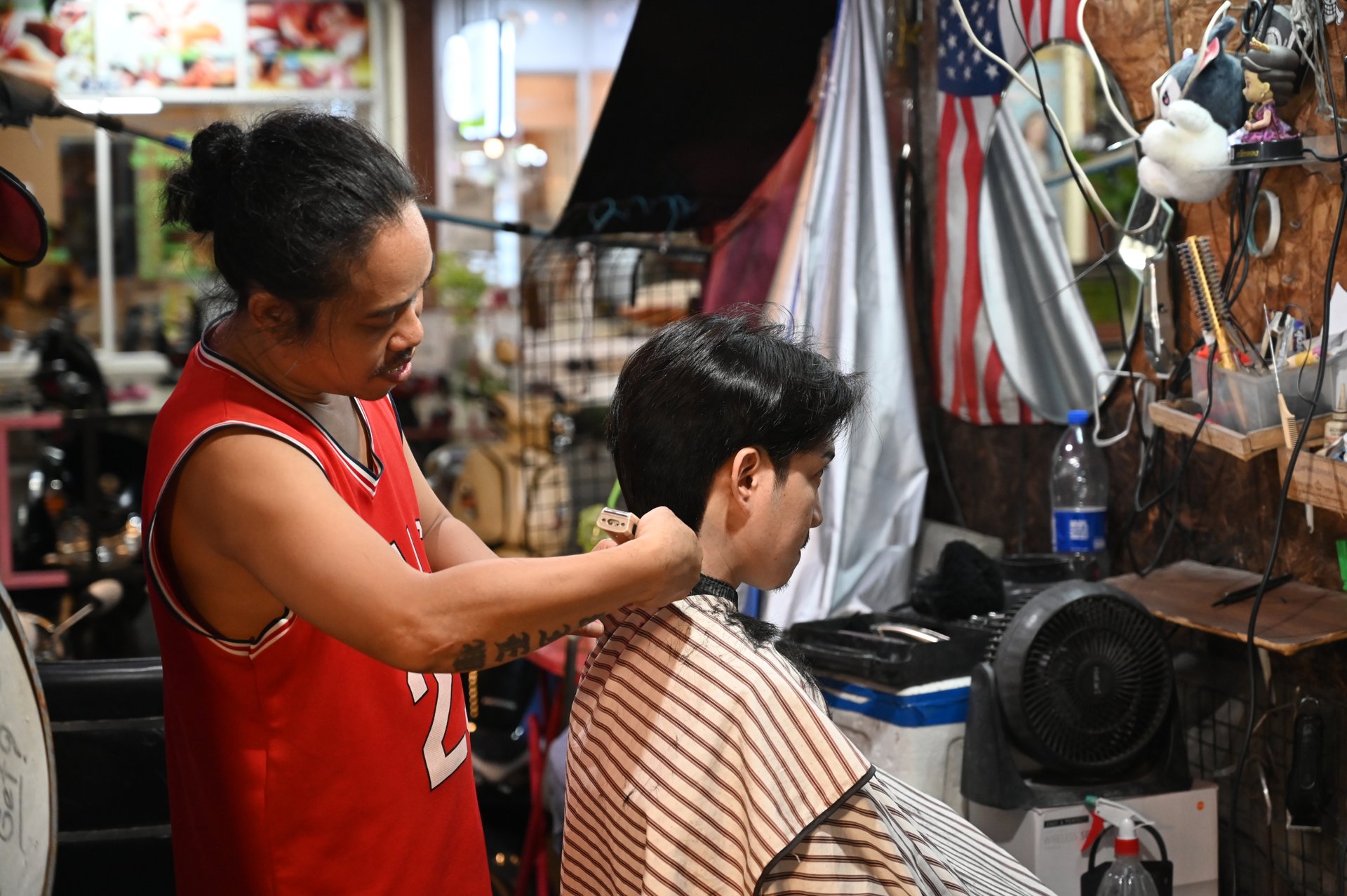
Hair grows about half an inch a month, and it grows everywhere at once, which is why grow outs look messy: the sides and back reach an unruly length weeks before the top looks intentional. The fix is maintenance cuts that protect the top while tidying the sides and neckline. Tell your barber the goal length up front, because a cut meant to grow out is shaped differently from a cut meant to hold.
Expect the transition to take two to three visits. Photos help here more than usual, since a target gives the barber something to build toward instead of guessing how long you mean by longer. If you are growing toward a style that needs a part or a sweep, say so early, because the blend on the sides depends on where the top is headed.
Dry air, static, and hat season
Dry scalp is the most common winter complaint in Matthews shops. Heated air pulls moisture out, hair feels brittle, and light flakes appear on dark shirts. A richer conditioner, less scalding shower water, and washing a little less often in the coldest weeks help many men. If flakes are heavy, yellowish, or paired with redness and itching that does not settle, that is a different problem and worth a proper look rather than a stronger shampoo.
Static responds to moisture too. A small amount of leave in conditioner or a matte styling cream applied to damp hair reduces flyaways far better than piling on dry product later. For hat hair, the trick is rebuilding volume after the hat comes off: flip the hair with your fingers, or keep the style short enough and textured enough that flattening does not change its shape. Short, textured cuts are the most hat proof styles of all, which is the practical argument against growing out for some men.
Making the call
Grow it out if you want a visible change, your scalp handles length well, and you are willing to come in for shaping while it grows. Keep the summer cut if your job involves hats or helmets all day, if you prefer a low effort morning, or if your hair is fine and tends to look thin when it gets long. Neither answer is the winter answer. It is your answer, and a barber at Stallings Barber Shop can tell you in one visit which route your hair type supports.
One timing note: start the switch early in fall. A grow out begun in October looks settled by the holidays. The same grow out begun in late November spends the holiday photo season in the awkward middle.
Common questions
When should I start growing my hair out for winter?
Early fall is ideal. Starting in October gives two to three shaping visits before the coldest weeks, so the length looks intentional by the holidays.
How do I stop static in my hair during winter?
Add moisture first: conditioner, less very hot water, and a small amount of cream or leave in product on damp hair. Static is mostly dryness plus hat friction, not damage.
Can I keep a fade all winter?
Yes. Many men keep the fade and simply leave the sides slightly longer or raise the blend. The style does not expire with the season.
Photos in this guide are representative stock images.
← All guides from Stallings Barber Shop← Back to Stallings Barber Shop